Lingua
by Irene Tamayo
Project Overview
The product:
Lingua is a language-learning website and mobile app that help users to learn and improve their target languages, improve users’ translation, reading comprehension and speaking while given the chance to interact with other language learners.to enjoy learning other cultures and make new friends with similar interests.
Project duration:
November 2021 to February 2022

Problem and Goal
The problem:
A huge percentage of foreigners are struggling to live and work in a foreign country due to the lack of language proficiency skill especially in non-English speaking countries such as Japan, China and more. Due to lack of time, chance and money to enroll in language schools, people prefer to learn using language apps.
The goal:
The goal is help users to learn their target language, get a chance to get interact with other language learners and pass the language exams.
My role:
UX designer leading the app and responsive website design from conception to delivery
Responsibilities:
Conducting interviews, paper and digital wireframing, low and high-fidelity prototyping, conducting usability studies, accounting for accessibility, iterating on designs, determining information architecture, and responsive design.

User Research: Summary
I used Lingua’s data on language learning to develop interview questions, which were then used to conduct user interviews. Most interview participants reported feeling badly about the lack of language skill, but they aren’t able to learn much from other learning apps. The feedback received through research made it very clear that users would be open and willing to work towards self-learning and interactive language learning if they had access to an easy-to-use tool to help them anytime and anywhere.

Persona: Crystal
Problem statement:
Crystal is an English teacher who needs an user-friendly language learning app to study a language because she wants to connect with foreign people at work.

Persona: Ralph
Problem statement:
Ralph is a busy engineer who needs a way to take his language communication skills to the next level because he wants to lessen his struggles in communicating with people and living in different countries.

Competitive Audit
An audit of a few competitor’s products provided direction on gaps and opportunities to address with the Lingua app.
Click to view the full competitive audit here: competitive audit

Ideation
I did a quick ideation exercise to come up with ideas for how to address gaps identified in the competitive audit. My focus was specifically on selecting a language and how to get started.

Digital Wireframes
After ideating and drafting some paper wireframes, I created the initial designs for the Lingua app. These designs focused on delivering personalized guidance to users to help select a language.

Low-fidelity prototype
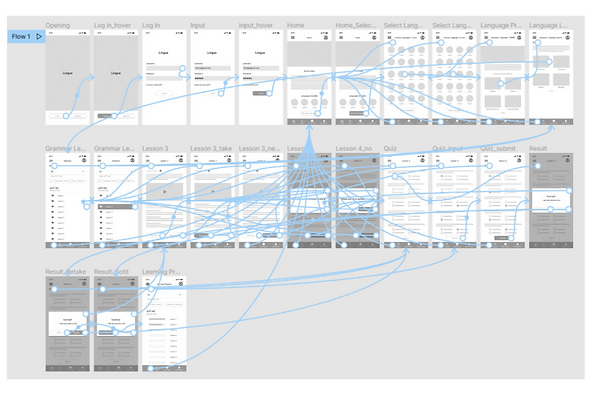
To prepare for usability testing, I created a low-fidelity prototype that connected the user flow of selecting a language, learning grammar and taking a quiz.
Usability Study: Parameters
I conducted a usability study with 5 participants in Japan where I live now.

Usability Study: Findings
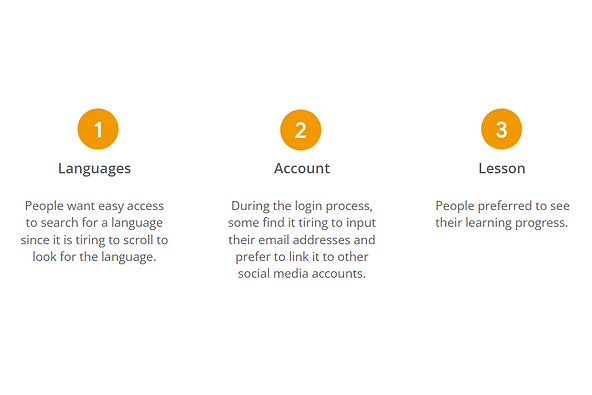
These were the main findings uncovered by the usability study:
Mockups
Based on the insights from the usability studies, I applied design changes to improve the language searching flow by providing another search box. With this, making it easier to search the language and with filtered language automatically left on the screen once the name of the language is “typed” in the input field.

Mockups
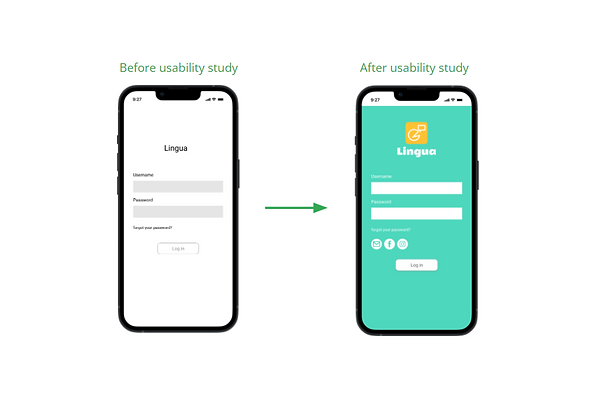
To make it more convenient to login, I added icons for users to click to automatically login if they are already login to other social media account.
Mockups
These are the other page designs of the Lingua app.

High-fidelity Prototype
The high-fidelity prototype followed the same user flow as the low-fidelity prototype, including design changes made after the usability study.
View

Accessibility Considerations
I also applied the accessibility standards to my design for diverse users.

Sitemap
With the app designs completed, I started work on designing the responsive website. I used the Lingua sitemap to guide the organizational structure of each screen’s design to ensure a cohesive and consistent experience across devices.

Responsive Designs
The designs for screen size variation included mobile, tablet, and desktop. I optimized the designs to fit specific user needs of each device and screen size.

Takeaways
Impact:
Users shared that the app made language learning seems to be interesting and convenient because they can study anytime and anywhere. One quote from peer feedback was that “the Lingua app helps reduce communication barrier between people of different nationalities.”
What I learned:
I learned that even though the problem I was trying to solve was a big one, diligently going through each step of the design process and aligning with specific user needs helped me come up with solutions that were both feasible and useful.
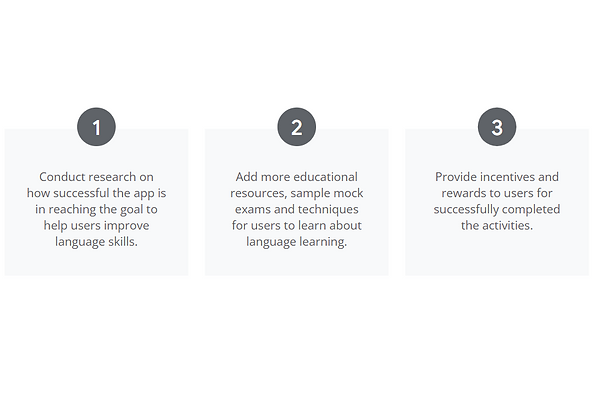
Next Steps
Let's Connect!
Thank you for your time reviewing my work on the Lingua app! If you’d like to
see more or get in touch, my contact information is provided below in this site.
